


От д-р Кирил Чуканов
Солт Лейк Сити, Юта, САЩ
February 2026
През есента на 1993 г. представих работата си на „Международната конференция по студен термоядрен синтез“ в Мауи, Хавай. Вижте: Статии на Chukanov Energy „CF CONF 1993 Hi – НОВА ПУЛСОВА ГАЗОВА ТЕХНОЛОГИЯ ЗА СТУДЕН ТЕРМОЯДРЕН СИНТЕЗ, ХАВАЙ, 1993“; „Студеният синтез може да оправдае името си“, Deseret News, 18 октомври 1992 г.
Освен научния доклад, направих публична демонстрация пред участниците в конференцията на ефектите на „затопляне чрез квантова свободна енергия и охлаждане чрез квантова свободна енергия“ в сплав SmCo5 с водороден газ под налягане от 10 атм. На демонстрацията ми присъстваше, наред с други, един от откривателите на така наречения „студен ядрен синтез на деутерий в паладиев метал“ – Мартин Флайшман. Той даде висока оценка на моята работа.
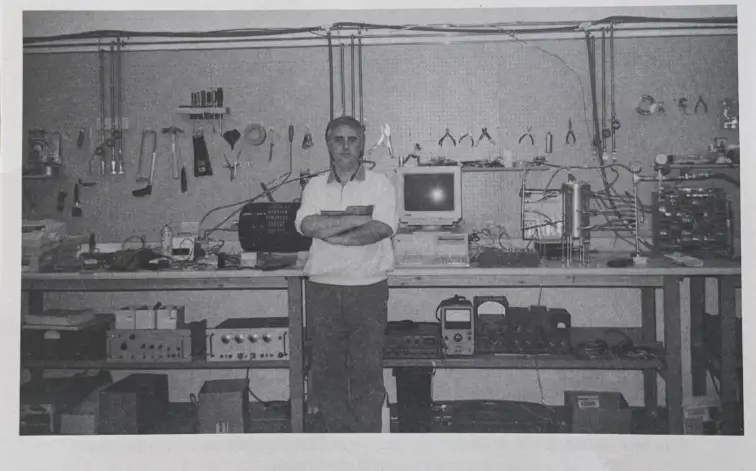
Фигура 1 показва схемата на моята експериментална установка:
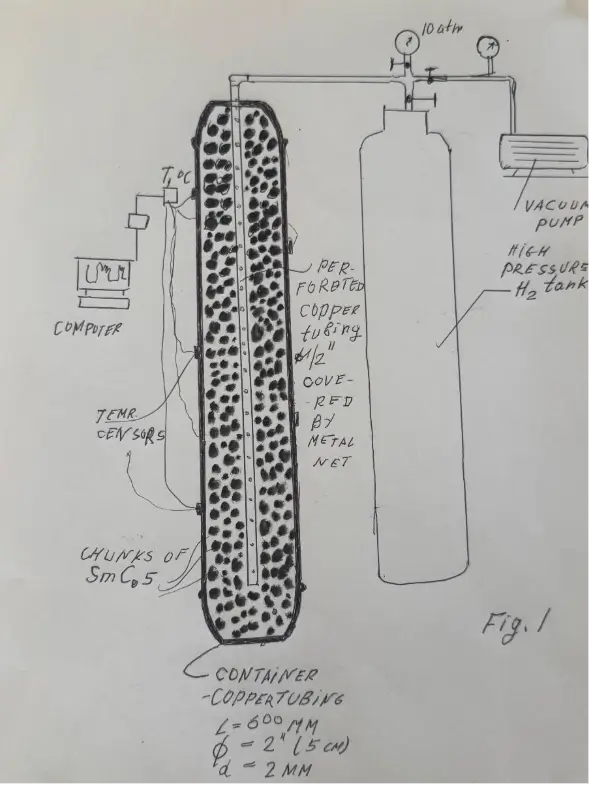
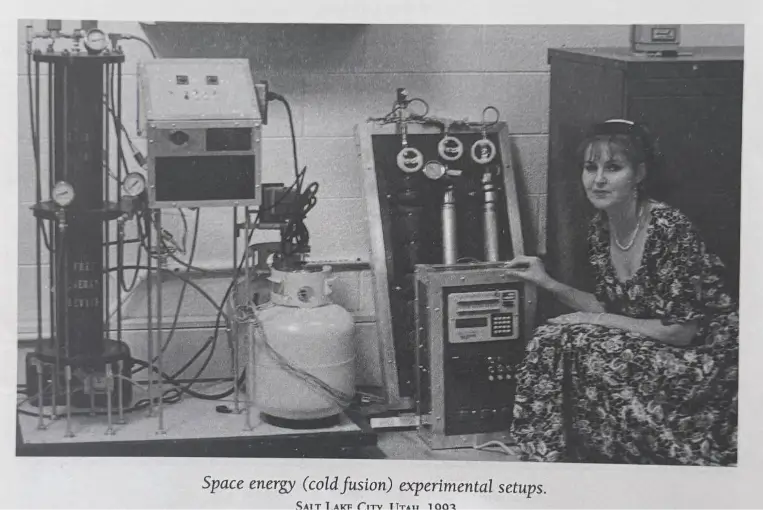
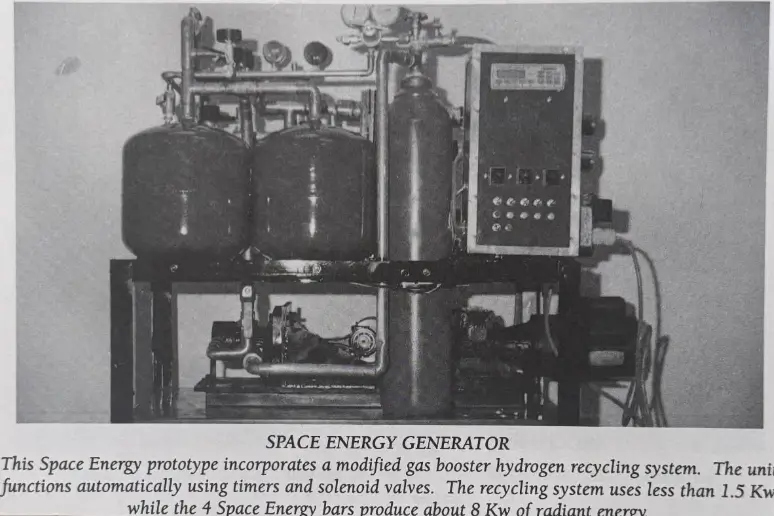
До момента нито един изследовател, освен мен, не е работил със сплавта SmCo5. Десетилетия по-късно някои учени заявиха, че са получили ефекти на затопляне, използвайки същите SmCo магнити или неодимови свръхсилни магнити. Те не споменаха да са наблюдавали ефекта на охлаждане. Може би защото не могат да обяснят този ефект чрез „нискоенергийни ядрени реакции“. По-късно терминът „студен термоядрен синтез“ беше трансформиран в термина „нискоенергийни ядрени реакции“ (LENR) от научната общност. Разбира се, те „забравиха“ да споменат, че това е мое откритие и че аз твърдя, че това явление няма нищо общо с ядрените реакции.
Структурата на сплавта SmCo5 (произведена чрез прахова металургия) позволява бързо и високоплътно съхранение на водороден газ в нейната кристална решетка. Забележка: образците от сплавта SmCo5 в моите експерименти не са магнитизирани. Образецът от сплав SmCo5 показва значителен ефект с необичайни, свръхбързи повишавания и спадове на температурата. За една секунда промяната в температурата на образеца беше десетки oC, плюс или минус oC. Вижте компютърните графики от експеримента (проведен в моята лаборатория през 1993 г.). Вижте Фигура 2.
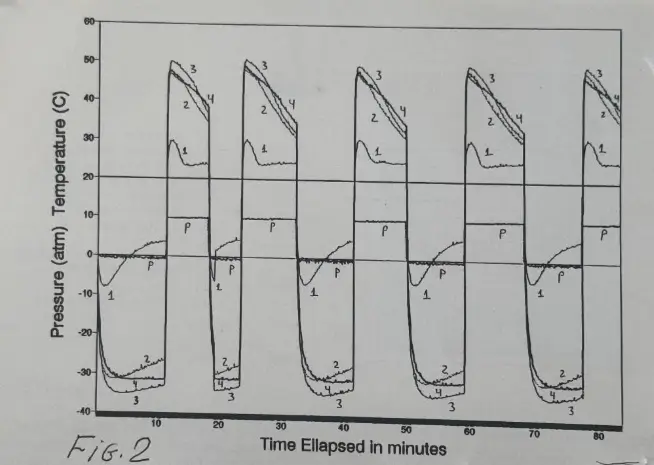
Първоначалната температура на образеца SmCo5 беше стайна температура (20 °C). След бързо зареждане с водороден газ в образеца SmCo5, температурата на медния контейнер се повиши до +50 °C почти веднага. След обратния процес на бързо изпускане (с ротационна вакуумна помпа), температурата на водородния газ в медния контейнер падна за част от секундата далеч под първоначалната стайна температура, до -35 °C. Общият спад беше 85 oC. Температурата на самата сплав SmCo5 би трябвало да е доста над +50 °C (етап на зареждане) и доста под -35 °C (етап на изпускане).
Моите инвеститори поканиха за съвет един от „откривателите“ на студения ядрен синтез на тежък водород (деутерий) в паладиев метал – Стив Джонс. Този човек, ядрен физик, вече не вярваше в реалността на синтеза на деутерий при ниска стайна температура. Той предположи, че в пробата SmCo5 протича химична реакция – хидратация, която генерира топлина. Стив Джонс не обясни защо температурата на пробата падна значително под първоначалната ѝ стайна температура, нито механизма на това „странно“ явление. Той просто игнорира този важен факт. За него, както и за други конвенционални учени, ако се генерира енергия по време на зареждане с водороден газ, процесът е или химичен, или ядрен. И тъй като обикновеният лек водород (използван в моите експерименти) не извършва ядрен синтез, този процес може да бъде само химичен. Но защо химичните реакции се случват толкова бързо (част от секундата)? Химични реакции се случват, но хидратацията не е химична верижна реакция – експлозия? Няма отговор на този въпрос от професионални експерти като Стив Джонс. Моите инвеститори повярваха на мнението на този професионалист и спряха да инвестират. По-късно, през 2020 г., в родната ми страна България, реших да проверя стабилността на проба от неодимова сплав, произведена чрез прахова металургия и използвана за свръхсилни магнити. Разбира се, използвах немагнетизирана проба. Налягането на водородния газ беше много по-високо, до 100 атмосфери. Както очаквах, тази сплав също генерира значително количество енергия (топлина). Почти веднага след началото на зареждането с водороден газ обаче се чу пукащ звук (отвън на металния контейнер), което показваше разрушаването на пробата от неодимова сплав. Същото се случи и в ранните ми експерименти със сплав SmCo5 (през 1990-1991 г.), но пробата SmCo5 беше под много по-ниско налягане (10 атм.). Пробата SmCo5 издържа 4-6 цикъла на зареждане и разреждане с водород без разрушаване. След като се случи това разрушаване, останалата част от пробата SmCo5 беше в състояние на прах и този прах не показва топлинните ефекти на „свръхплътната квантова плазма“.
Какво се случва в твърдо тяло – приемник на „свръхплътна квантова плазма“? В обикновената неквантова плазма отделните частици (йони или атомни ядра) се държат като независими единици – всяка частица сама за себе си. Когато в резултат на компресия на водороден газ в метали (водородът в кристалната решетка на металите е под формата на ядра, т.е. под формата на обикновена плазма), съвкупността от водородни ядра се приближава до квантовата граница Rk,p. При определено критично разстояние от Rk,p тази съвкупност се превръща в квантова единица. Всички водородни ядра престават да съществуват независимо едно от друго и да действат като отделни частици. Тази квантова единица все още е триизмерна плазма от отделни частици. Въпреки това, за разлика от обикновената плазма, всички частици (водородни ядра) се подчиняват на колективната воля; те са синхронизирани. Наричам това състояние на материята, непознато на официалната академична наука – свръхплътна квантова плазма. За да избегне преминаването на квантовата граница Rk,p и превръщането си в неопределена материална субстанция (което означава небитие), колективната свръхплътна квантова плазма е принудена да следва тази граница плътно, без да я пресича. Законът за запазване на енергията се принася в жертва! Температурата на свръхплътната квантова плазма се повишава, когато нейната плътност се увеличава, и намалява (охлаждане), когато нейната плътност намалява. Това обяснява ефекта на охлаждане на SmCo5 при температури далеч под стайната. Ефектът на квантово охлаждане изчезва, когато свръхплътната квантова плазма бъде разрушена. Това се случва, когато плътността стане твърде ниска по време на охлаждане или когато състоянието на свръхплътна плазма се поддържа твърде дълго. Вижте Фигура 3.
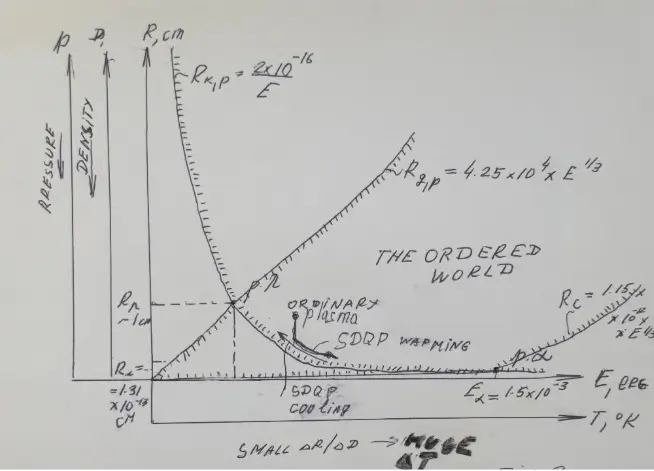
Както е показано на Фигура 3, в свръхплътната квантова плазма с висока плътност малките промени в плътността водят до големи промени в температурата. В земните условия плътността на водородните ядра в ядрото на Земята е достатъчно висока, за да предизвика образуването на свръхплътна квантова плазма и да нагрее железно-никеловото ядро на своя приемник до точката на топене. Земното ядро е гореща, течна железно-никелова лава и свръхплътна квантова плазма от водород. Голяма част от земната мантия е нагрята до точката на топене – лава. SDQP поддържа земното ядро при постоянна, висока температура завинаги.
Какво задейства промените в плътността на SDQP и, като следствие, температурата в земните недра? Отговорът е: Антропният принцип, изпълняващ изискванията на Квантовата вълна на еволюцията на живота!!! Това е правилният отговор, вярвате или не. Промените във вътрешната температура на Земята улесняват унищожаването на старите доминиращи видове живот и установяването на нови, по-прогресивни доминиращи видове или нов, по-прогресивен тип човешки същества.
В звездите, галактическите ядра, квазарите и други масивни космически тела, разположени далеч от Земята, антропният принцип е много слаб или нулев. Промените в тяхната плътност и в следствие на това в тяхната температура/светимост на SDQP недрата са случайни, поради високата турбулентност на материалната субстанция при много високи температури. Най-малката промяна в плътността предизвиква много голяма промяна в тяхната температура.
През 2022 г. ние (аз и моят партньор Георги Станчев) проведохме един много важен, новаторски (за физиката) експеримент. Вижте Фигура 4.
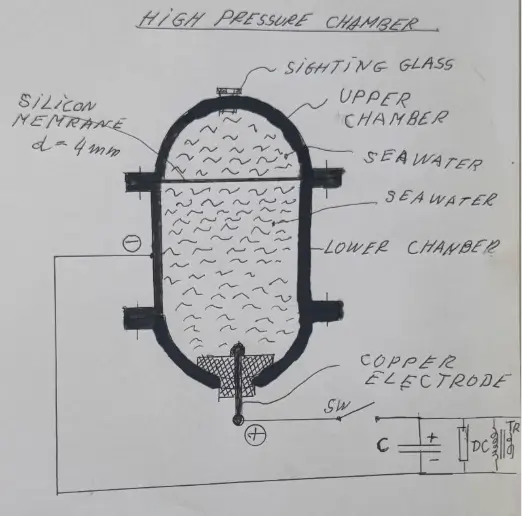
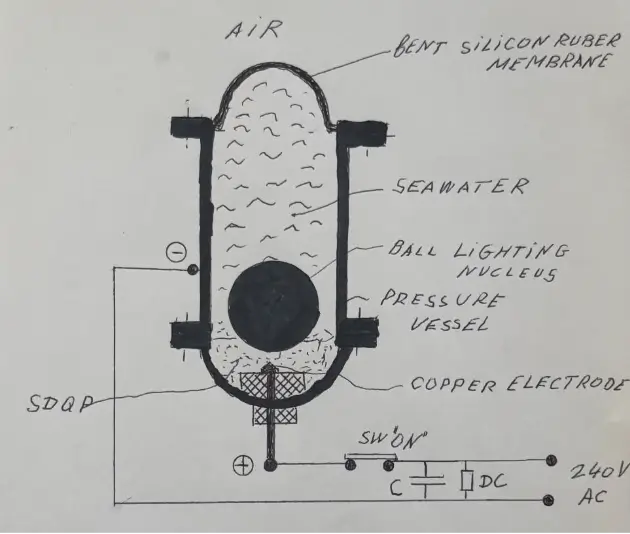
Двете камери на съда под високо налягане бяха пълни с морска вода. Кълбовидна мълния беше създадена в долната камера с помощта на импулсен разряд от високоволтови кондензатори с голям енергиен запас. Почти веднага след разряда се случи нещо много необичайно – устойчивото на високо налягане наблюдателно стъкло беше разрушено и от отвора му изригна високоскоростна струя морска вода, осветена от интензивна светлина, идваща от горната камера. Единственото възможно обяснение за това събитие беше: създаване на свръхплътна квантова плазма в горната камера (и, разбира се, в долната камера също) на съда под високо налягане. Силиконовата мембрана не може да бъде огъната по посока на горната камера под въздействието на налягане, идващо от долната камера (кълбовидната мълния разрушава пространството на мястото на появата си; в резултат на това налягането в морската вода се увеличава значително), тъй като течностите са несвиваеми. Но мембраната все пак е огъната. Когато отворихме съда под налягане, видяхме, че мембраната е невредима – без дупки, без изгаряния. Същото се случи и по-рано в моите експерименти във Варна, България (2012 г.). Камерата, пълна с морска вода, беше отделена от откритото пространство на лабораторията чрез силиконова термоустойчива мембрана. Когато в камерата се появи кълбовидна мълния, мембраната се огъна значително в посока към открия въздух. Допълнителният обем над първоначалното положение на мембраната (преди създаването на кълбовидната мълния) и новото огънато положение на мембраната бяха точно равни на обема на ядрото на кълбовидната мълния, както очаквах. Този експеримент беше още едно доказателство за разрушаването на пространството на мястото на появата на кълбовидната мълния и формирането на свръхплътна квантова плазма. В този случай въздухът е свиваема субстанция, така че мембраната се е огънала навън от камерата безпрепятствено. Вижте фигура 5 и някои от моите видеоклипове, публикувани в интернет.
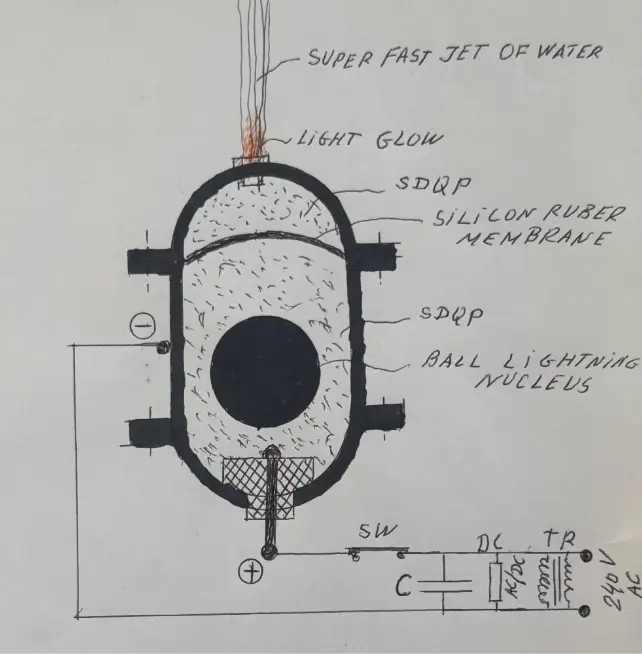
За да има възможност мембраната да се огъне в посока на горната камера, пълна с морска вода, течната вода трябва да бъде трансформирана в свиваем материал. Това е плазма – свръхплътна квантова плазма!!! Вижте Фигура 6.
След експериментите с демагнетизирани магнитни сплави ми стана ясно, че практическото приложение на генерирането на свободна квантова енергия (топлина или студ) в твърди тела е невъзможно поради бързото разрушаване на твърдите тела – приемници на „свръхплътната квантова плазма“. Затова реших да променя стратегията: да опитам с нетвърдо тяло като приемник за свръхплътна квантова плазма, която не може да бъде разрушена веднъж щом бъде създадена. Или да създам в лаборатория условия, подобни на тези в звездите и в достатъчно големите планети като Земята.
В звездите и в други масивни космически тела (квазари, галактически ядра, …) гравитационните сили са толкова силни, че лесно неутрализират налягането, създадено от свръхплътната квантова плазма, и правят процеса на генериране на свободна енергия непрекъснат, без прекъсвания.
В земните недра гравитацията също е достатъчно силна, така че съществуват условия за постоянното съществуване на свръхплътна квантова плазма.
Стълбовете на официално приетия Стандартен модел на космологията са:
- Големият взрив: началото на Вселената
- Създаването и еволюцията на звездите и галактиките са резултат от комбинираното действие на гравитационните сили и ядрените реакции.
След неочакваните наблюдения на JWST, някои учени са готови да пожертват първия стълб на Стандартния модел. Някои казват, че не е имало Голям взрив; други предполагат, че е имало, но той се е случил не преди 13,8 милиарда години, а преди 27 милиарда години или по-рано. Въпреки това, всички официални учени и аматьори не са готови да пожертват втория стълб на Стандартния модел. Защото те нямат ни най-малко съмнение, че енергийните източници в недрата на звездите, галактиките, галактическите ядра, квазарите и масивните планети биха могли да бъдат различни от ядрената енергия. Както обясних в по-ранните си публикации, не е имало начало на вселената с Голям взрив, изобщо не е имало начало, вселената е стационарна, без промени във времето, без еволюция, тя не е създадена от нещо или от някого, тя съществува в цикли (13,82 милиарда години), едни и същи във всички подробности. Причината за съществуването на вселената е вътре в цикъла, а не извън него. Също така обясних, че енергийният източник, който кара звездите и другите масивни обекти във вселената да светят и поддържа ядрото на нашата планета постоянно горещо и разтопено, е квантовата свободна енергия на свръхплътната квантова плазма!!!
Бетелгейзе е червен свръхгигант, видим с невъоръжено око в нощното небе. Разстоянието до тази звезда свръхгигант от Слънцето е 400-600 светлинни години, а диаметърът ѝ е 640-740 пъти по-голям от този на Слънцето. Светимостта на този гигант е силно променлива. Например, започвайки от октомври 2019 г., Бетелгейзе започна забележимо да потъмнява. За кратко време Бетелгейзе дори изчезна от полезрението. Астрономите предполагат, че по-малка звезда-компаньон (с много по-малка светимост) я е засенчила при преминаване пред нейния диск. Такава звезда-компаньон обаче никога не е била наблюдавани преди. Тази звезда-компаньон е чиста спекулация. Такива големи флуктуации на светимостта, дори до степен да стане невидима за наблюдение за кратък период от време, могат да бъдат обяснени ЕДИНСТВЕНО чрез флуктуации в плътността на свръхплътната плазма в недрата на Бетелгейзе.
Край